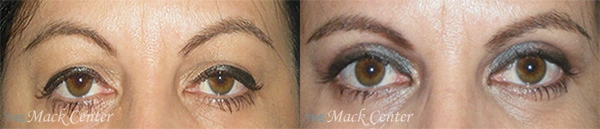
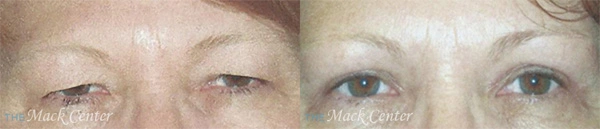
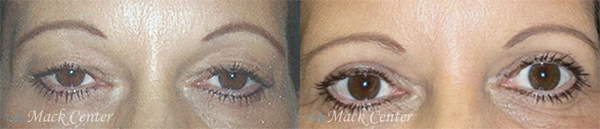
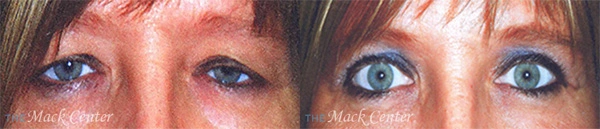
Tampa Bay, FL

Dermatochalasis & Ptosis


Introduction

Dermatochalasis & Ptosis Tampa

As the skin ages, changes can appear across the entire body, including the eyelids. Collagen production slows, muscle tone weakens, and the skin begins to sag. Around the eyes, these changes can lead to drooping eyelids that may obstruct vision or affect facial appearance.

At The Mack Cosmetic Center in Tampa, we offer surgical solutions for dermatochalasis and ptosis to help correct these concerns. These conditions often involve excess skin or weakened muscles around the eyelids. Surgery can address both function and appearance with long-lasting, natural-looking results.

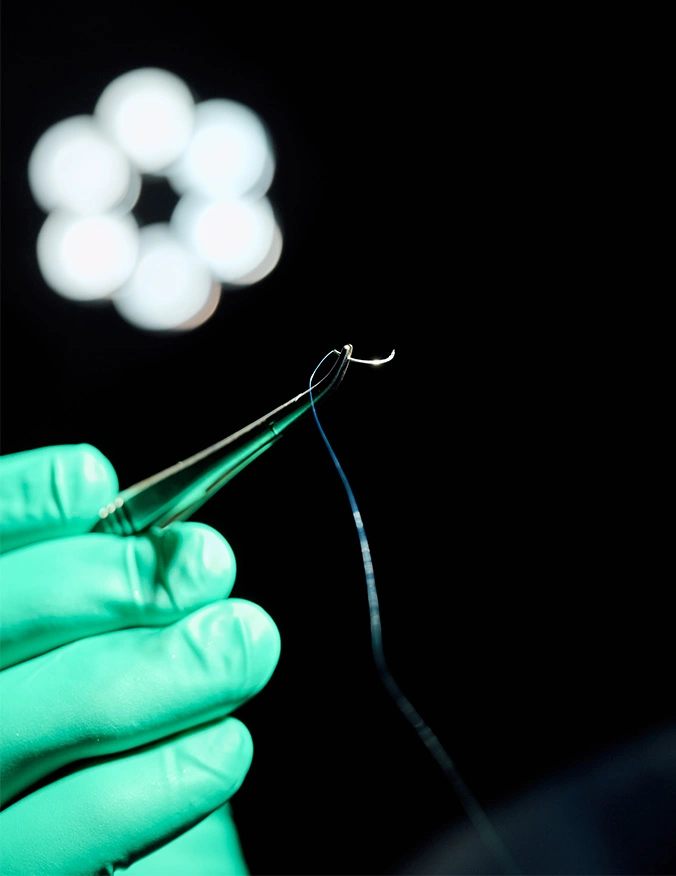
A macro photograph of a hand in a bright green surgical glove holding a pair of metal surgical tweezers. The tweezers are gripping a thin, curved surgical needle with a blue suture thread attached. In the dark background, a circular surgical light is out of focus, creating a soft bokeh effect. - Dermatochalasis and ptosis in Tampa, FL

What Is Dermatochalasis?

Dermatochalasis of the eyelid refers to excess skin that hangs over the upper or lower eyelid. It often appears as loose or crepey skin that can bunch or weigh down the eyelid. In some cases, the tissue presses on the lashes or even blocks part of your vision. You might notice a tired or heavy look around the eyes, especially toward the end of the day. We usually see this more in older patients, but it can also appear earlier depending on genetics and skin elasticity.

What Is Ptosis?

Ptosis is defined as the drooping of the upper eyelid. The two classifications of ptosis are “congenital” and “acquired”. Most patients presenting with ptosis at The Mack Center have acquired ptosis. Ptosis can cause visual loss, particularly when peripheral vision is obstructed. Patients may also notice difficulty with reading, as the ptosis is often worsened when looking down. Ptosis will also decrease the amount of light reaching the eye and can reduce visual acuity, particularly at night.
What Causes Dermatochalasis?

Dermatochalasis of both upper eyelids usually develops from age-related changes in the skin around the eyes. As collagen breaks down, the skin loses support and starts to sag. Genetics can speed this up, especially if your parents or siblings have dealt with similar issues. Some patients also develop it after long-term sun exposure, which breaks down the skin’s structure. It is also more common in patients with certain medical conditions, such as thyroid eye disease or chronic swelling.

What Causes Ptosis?

There are two types of ptosis: congenital and acquired. By far the most common presentation at the Mack Center is acquired. This is secondary to involution or aging changes of the eyelids. The second cause of ptosis is congenital, which is due to problems with the development of the muscle that raises the eyelid.

What Are the Common Reasons Why a Patient Would Want a Dermatochalasis & Ptosis Repair?

Patients seeking out dermatochalasis and ptosis repair are typically struggling with a combination of cosmetic and functional issues related to loose, sagging skin and lax muscles. These concerns can lead to a tired, aged appearance and a reduced field of vision, which can impact quality of life. Common reasons why patients might choose the procedure include:

  • Obstructed eyesight
  • Problems completing everyday tasks like driving and reading
  • Ongoing eye strain and headaches
  • Discomfort and irritation
  • Self-consciousness over their aesthetic appearance
  • Seeking a more alert, energized facial expression

What Kinds of Symptoms Would a Patient with Ptosis Have?

Patients with ptosis typically present to the Mack Center with complaints of loss of the superior visual field and peripheral vision. Patients note difficulty driving, reading, and interference with other daily activities. This condition can affect only one eyelid, though it most often affects both upper eyelids. Ptosis is a progressive condition that usually develops slowly over many years.

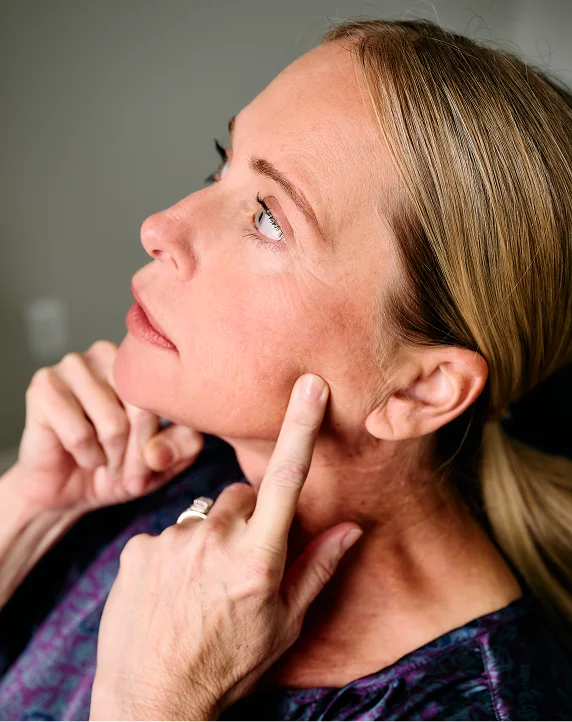
A profile shot of a blonde woman looking upward while pointing to a specific area on her cheek. She appears to be identifying a skin concern or area for treatment during a consultation. She is wearing a dark, patterned top and a silver ring. - in Tampa, FL

How Are Dermatochalasis and Ptosis Diagnosed?

We diagnose dermatochalasis and ptosis through a physical exam and a review of your symptoms. During your visit, we check the position of your eyelids, the strength of your eyelid muscles, and how much the skin may be affecting your vision. We might ask if you’ve noticed changes in your peripheral vision or any fatigue around the eyes. In some cases, we perform a visual field test to assess the extent of visual field obstruction. Photos can also help us document the eyelid position and guide surgical planning.

How Do We Treat Dermatochalasis and Ptosis?

The treatment for ptosis is surgery, with various surgical options. The surgery is performed on an outpatient basis. During the patient’s initial evaluation, ocular, medical, and surgical histories are obtained to identify appropriate candidates for ptosis repair. The surgeon must be aware of any history of dry eyes. The discussion of any coagulation problems or blood thinners will also be ascertained, as well as any history of thyroid eye disease, previous eyelid surgery, or eyelid trauma. Dr. Mueller or Dr. Mack will then perform the examination to measure the position of the upper eyelid height and crease, and to assess the function of the muscle that lifts the eyelid. This information will be used to determine the surgical procedure to correct the ptosis or dermatochalasis.

Less common types of ptosis can also be diagnosed through other tests, which are also performed after the initial consultation with Dr. Mack. Commercial insurance carriers and Medicare may cover the surgical repair of ptosis if the impairment of the peripheral vision meets certain criteria. During the patient’s initial test, visual field testing will be performed with the eyelids taped and untaped to determine the level of the patient’s functional impairment of peripheral vision and the potential for visual improvement. External photographs will also be obtained, and the visual field and the external photos will then be sent to the commercial insurance carrier or Medicare for predetermination of the surgery.

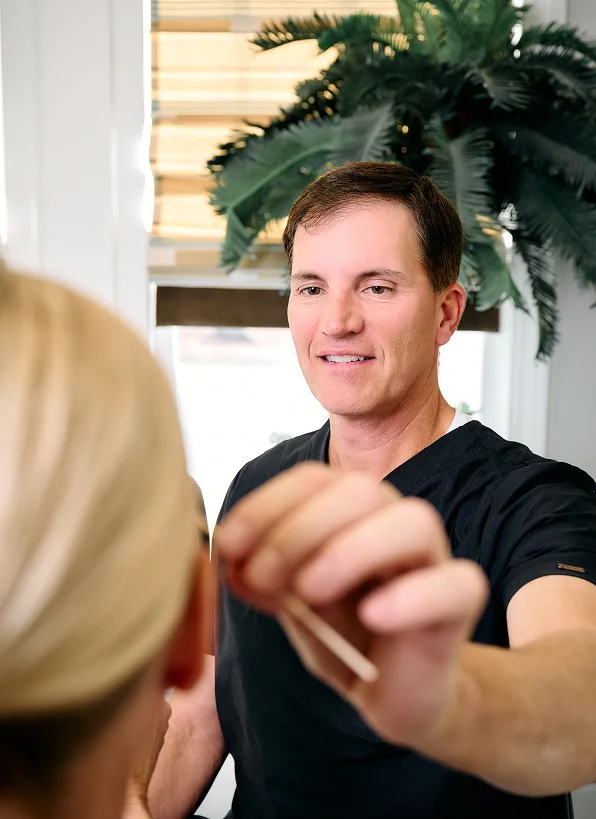
A male doctor in black surgical scrubs smiling warmly while speaking to a patient, who is partially visible in the foreground with blonde hair. The background features a bright room with a large green palm plant, creating a comfortable clinical environment. - in Tampa, FL
white

What Type of Anesthesia Is Used for Dermatochalasis and Ptosis Surgical Correction?

The type of anesthesia used for dermatochalasis and ptosis surgical correction is either local anesthesia or IV sedation (MAC anesthesia), which is performed as an outpatient. MAC anesthesia is a procedure where the anesthesia team administers small increments of a sedative to allow the patient to be relaxed, at which time the local anesthetic is administered for the patient’s comfort. Patients find this to be a very comfortable means of having surgery. Immediately following the surgery, ice packs will be placed on the patient’s eyelids. The patient will be discharged home with ice packs.

black logo

What Is the Recovery Following Ptosis Repair?

Your Guide to Post-Dermatochalasis & Ptosis Care

Recovery following dermatochalasis and ptosis repair includes applying a topical antibiotic-steroid ointment for the first week after surgery. Sutures are removed approximately 7-8 days after surgery. The patient is asked to apply ice compresses to the bilateral upper eyelids for the first 48 hours after ptosis repair. Post-operative evaluations to monitor the patient’s progress will occur at the Mack Center.


Following completion of the ptosis repair by Dr. Mueller or Dr. Mack, the patient will have swelling and bruising of the upper eyelids. The patient is asked to avoid bending, lifting, and straining for the first week following surgery and to have limited activities. The patient is also asked to apply ice packs and an antibiotic steroid ointment. It is also recommended that the patient take arnica and bromelain post-operatively to reduce bruising and swelling. At the one-week post-op visit, when the sutures are removed, the patient will still have bruising and swelling, but they should be much improved from the day after surgery. The patient should notice improvement in their superior and peripheral vision, which will help with their daily activities, including driving and reading.

black logo

How Much Does a Surgical Correction of Ptosis and/or Dermatochalasis Cost in Tampa, FL?

The cost of a surgical correction of ptosis and/or dermatochalasis in Tampa varies based on your goals, your individualized treatment plan, and whether your procedure is combined with other cosmetic solutions to maximize your results. By attending a private, informative consultation with either Dr. Mack or Dr. Mueller, you can receive a transparent price quote to help you begin preparing financially for your treatment.


Will Insurance Cover My Surgery?

Insurance may cover eyelid surgery when it affects your vision. If the test for functional impairment shows that excess skin is blocking your peripheral vision, we can submit those results, along with photographs, to your insurance provider for review. Coverage decisions depend on the severity of the obstruction and your specific insurance plan.

Choosing The Mack Center for Eyelid Surgery in Tampa

When you come to The Mack Center for eyelid surgery, you will have a surgeon with extensive experience in oculoplastic and facial surgery. We offer detailed evaluations, clear explanations, and surgical plans that balance function and appearance. Dr. William Mack brings years of experience in eyelid surgery and continues to teach and present on the subject across national and international forums. His background in both cosmetic and reconstructive techniques helps us customize the right approach for each patient.

We stay current with advancements in oculoplastic surgery and regularly participate in research to refine our treatment of eyelid conditions such as dermatochalasis and ptosis. Our office is committed to ensuring you feel informed, prepared, and supported at every step of the process. We’re available to answer your questions, explain test results, and provide written resources when needed. From your first consultation through your post-op visits, you’ll receive attentive care from surgeons focused on safe and effective outcomes.

Dermatochalasis & Ptosis FAQ’S

Next Steps for Eyelid Surgery in Tampa, FL

Treating dermatochalasis and ptosis with eyelid surgery can improve your field of vision and restore the natural contour of your eyelids. When both conditions are present, we can often address them in one surgical visit to reduce downtime and support a more efficient recovery. At The Mack Cosmetic Center, we use detailed measurements, testing, and evaluation to determine the right approach for each patient. For more information on Tampa eyelid surgery, please contact the office at (813) 616-5589 to schedule a consultation today.