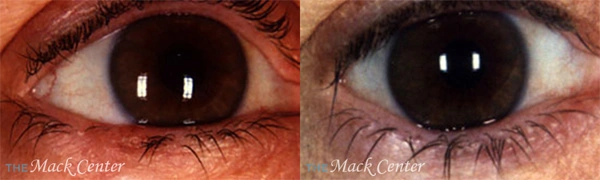
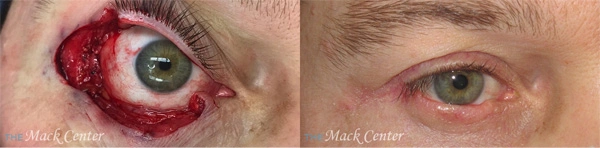
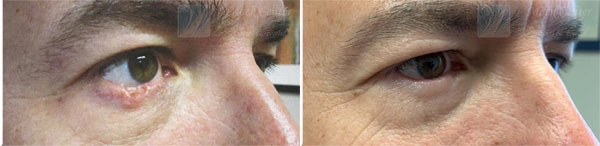

Tampa Bay, FL

Facial & Eyelid Skin Cancer Reconstruction

Introduction

Facial and Eyelid Skin Cancer Reconstruction Tampa

At The Mack Center in Tampa, FL, we specialize in restoring both your appearance and function through Mohs reconstruction after skin cancer. If you have undergone Mohs surgery and now seek the next step to correct cosmetic imperfections, Dr. Andrew Mack and Dr. William Mack have the expertise, skill, and artistry to achieve your unique aesthetic goals. They provide a compassionate and safety-oriented approach, walking you through the treatment process in a way that supports your long-term well-being and peace of mind.

A soft-focus, professional portrait of a woman with long, wavy blonde hair cascaded over one shoulder. She is looking directly at the camera with a calm expression, resting her chin lightly on her hand, which features a silver wedding band. She is wearing a white off-the-shoulder top against a warm, blurred pink and cream background. - Facial and Eyelid reconstruction in Tampa, FL

What Is Facial and Eyelid Skin Cancer?

Skin cancer commonly involves eyelid skin and adjacent facial areas. The most common location for eyelid skin cancer is the lower eyelid. It typically presents as a painless, elevated nodule. Basal cell carcinoma is the most common type of eyelid skin cancer. The second most common type of eyelid skin cancer is squamous cell carcinoma, with melanoma being the third most common. Basal cell and squamous cell carcinomas are typically slow-growing and tend to invade locally. Melanoma and sebaceous cell carcinoma are more aggressive types of eyelid skin cancer, and can potentially metastasize (spread to other parts of the body) and lead to further problems.

It is imperative to diagnose eyelid skin cancer and facial skin cancer as soon as possible so that prompt surgical intervention can be utilized.
What Kind of Symptoms Would a Patient with Facial and Eyelid Skin Cancer Have?

Signs and symptoms of eyelid skin cancer include missing eyelashes, ulceration, bleeding, and crusting, as well as any increase in size of any eyelid or facial lesions. Patients who have fair skin, blue eyes, and red or blonde hair have an increased risk for facial skin cancer. Patients who have a history of prolonged sun exposure during the first two decades of life are also at an increased risk for facial skin cancer. It should also be noted that patients with a history of prior basal cell carcinoma have a higher probability of developing skin cancers in the future.

What Are the Benefits of Facial and Eyelid Skin Cancer Reconstruction (Mohs Surgery)?

Mohs reconstruction in Tampa provides a range of restorative benefits, both cosmetic and emotional. These include:

  • Creates a seamless, aesthetically pleasing appearance
  • Enhances and preserves function in delicate areas (the eyes, nose, and lips)
  • Corrects the appearance of visible scars
  • Boosts confidence and self-esteem
  • Restores quality of life
  • Helps provide closure after the ordeal of skin cancer
  • Highly customized procedure based on your needs and anatomy

What Causes Facial and Eyelid Skin Cancer?

Risk factors such as fair skin, blue eyes, a history of prolonged sun exposure, and cigarette smoking all increase the risk of facial and eyelid skin cancer. It has been estimated that 40-50% of fair-skinned people who reach the age of 65 will eventually develop at least 1 skin cancer. Facial skin cancers may arise from preexisting lesions such as actinic keratosis and from cutaneous horns, which are funnel-shaped growths that extend from a red base on the skin.

Regarding melanoma, a skin care specialist should examine any mole or freckle that looks different from others and has any characteristics of the ABCDE classification. 

  • A represents any asymmetry, which means one half of the mole does not match the other half. 
  • B is for border, if the border edges of the mole are blurred or irregular. 
  • C is for color, which is a mole that does not have a uniform color. 
  • D is for diameter; a mole is suspicious if the diameter is larger than a pencil head eraser.
  • E is for evolving; a mole that is growing larger or changing color, or is beginning to itch or bleed, should also be checked. 

If a patient notices any features of the ABCDE classification in facial moles, the patient should seek further evaluation. As discussed, melanoma is not as common as the other types of skin cancer, but it is potentially much more serious.
Squamous cell carcinoma may appear as a firm red nodule or a scaly growth that bleeds or develops a crust. Basal cell carcinoma is the most common type of skin cancer on the eyelids and face, and it tends to spread slowly. Basal cell carcinoma can present as a pearly white or waxy bump, often with visible blood vessels. Sun exposure is the number one cause of skin cancer. Other exposures to environmental hazards, radiation treatment, and even hereditary treatment can also play a role. Approximately 90 to 95% of malignant eyelid tumors fall into the basal cell carcinoma category, with the lower eyelid being the most common site.

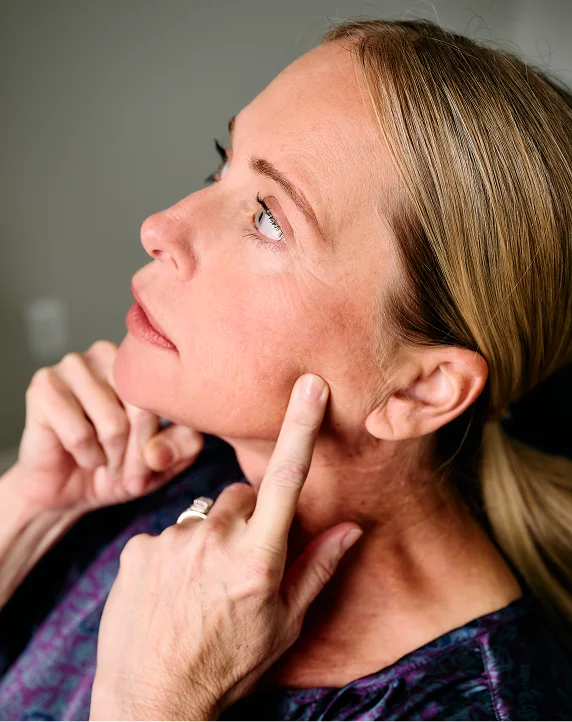
A profile shot of a blonde woman looking upward while pointing to a specific area on her cheek. She appears to be identifying a skin concern or area for treatment during a consultation. She is wearing a dark, patterned top and a silver ring. - in Tampa, FL

What’s the First Step?

To begin your treatment journey, you will meet with Dr. Mueller or Dr. Mack and their team in Tampa for an informative consultation. The doctor will complete a physical and medical assessment, discuss your goals for your appearance in depth, and answer all of your questions with transparency and care. He will ensure you clearly understand the procedure’s risks, recovery requirements, costs, and expected results, helping you form realistic expectations for your treatment process and outcome. Once you have been approved for Mohs reconstruction, we will book your surgery and provide guidelines on how to best prepare for your upcoming appointments.

What Is The Treatment for facial and eyelid skin cancers?

The most common treatment for eyelid and facial skin cancer is surgical excision with reconstruction. Typically, any lesions that are suspicious or exhibit any of the factors discussed under the ABCDE classification require a biopsy to rule out skin cancer. At the Mack Center, this is performed in the office under local anesthetic. Oftentimes, patients are referred to the Mack Center from their dermatologist or other health care provider after they have already had a biopsy proving skin cancer on the eyelid or facial regions.

Following pathological confirmation of the skin cancer, the patient will be scheduled for surgical excision with reconstruction. This can be done under Frozen Section or Mohs Technique. With Frozen Section, the cancer is removed, and the pathologist confirms that the margins are free of cancer while the patient is in the operating room, and reconstruction occurs at that time. 

Excision of skin cancer with the Mohs Technique is performed by a dermatologist who confirms that all the margins are free of tumor, and Dr. Mueller and Dr. Mack will see the patient for the reconstruction of the eyelid or facial defect. Both techniques confirm that the skin cancer has been completely excised. The surgeons will choose the reconstructive surgical technique based on the size and location of the eyelid or skin cancer.

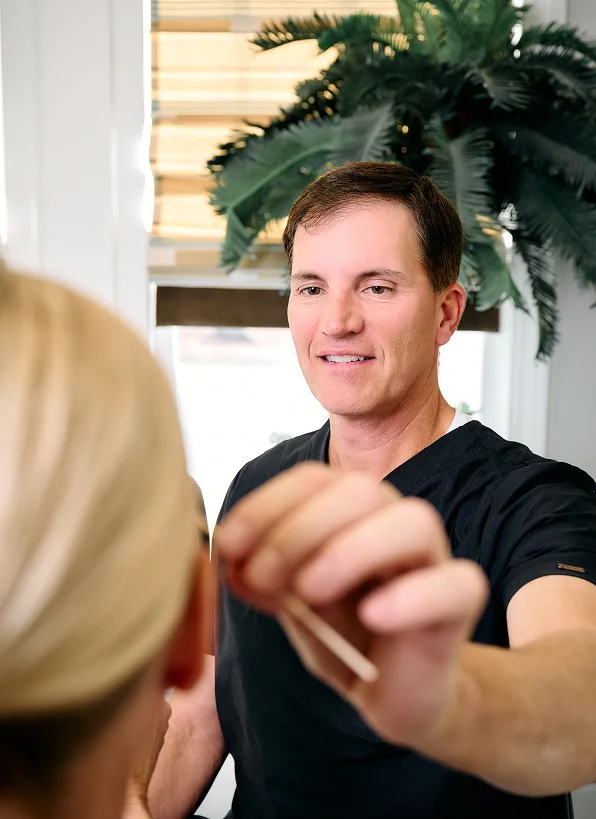
A male doctor in black surgical scrubs smiling warmly while speaking to a patient, who is partially visible in the foreground with blonde hair. The background features a bright room with a large green palm plant, creating a comfortable clinical environment. - in Tampa, FL
white
black logo

What is the Recovery Time Following Facial & Eyelid Skin Cancer Reconstruction?

Your Guide to Post-Facial & Eyelud Skin Cancer Reconstruction Care

The patient is instructed to apply an antibiotic ointment for the first week and to limit lifting, bending, and straining. Sutures are typically removed approximately 1 week after surgery. Dissolving sutures can also be used in certain surgical interventions. Post-operative evaluations are performed at the Mack Center. Typically, for the first 1-2 months following surgical excision, the patient must follow up very closely to monitor for any potential recurrence of the skin cancer.

What Type of Anesthesia is Used For Facial and Eyelid Skin Cancer Reconstruction?

IV sedation (MAC anesthesia), also called “twilight anesthesia,” is the anesthesia of choice for the surgical excision/ reconstruction of eyelid and facial skin cancers. These surgeries are performed on an outpatient basis at a local surgery center. MAC anesthesia is a technique where the anesthesia team administers small increments of a sedative to allow the patient to be relaxed so that local anesthetic can be administered for the patient’s comfort. Patients at the Mack Center find this procedure pain-free.

What Can a Patient Expect Following Reconstruction of Facial & Eyelid Skin Cancer?

Following the surgical procedure, the patient will notice swelling and bruising that will continue to improve day by day. Following suture removal, the patient is seen for follow-up evaluations to monitor for any recurrence of the facial skin cancer. The patient is also asked to monitor the areas at home, and a follow-up examination with the patient’s dermatologist or other health care provider is also recommended.

black logo

How Much Does a Facial and Eyelid Skin Cancer Reconstruction Cost in Tampa, FL?

The cost of facial and eyelid skin cancer reconstruction in Tampa varies depending on the areas targeted, the complexity of your treatment plan, and whether your surgery is combined with other procedures. You will receive a personalized quote for services once Dr. Mack completes your preliminary consultation and medical evaluation.

Choosing The Mack Center for Facial and Eyelid Skin Cancer Reconstruction in Tampa

At The Mack Cosmetic Center, we prioritize safety and continuity of care while utilizing today’s most advanced technologies and solutions, delivering a rewarding experience from start to finish. Our board-certified oculoplastic surgeon, Dr. William Mack, is known for his meticulous precision, keen eye for detail, and compassionate bedside manner. He is an internationally esteemed author, lecturer, and educator who has received the Best Cosmetic Surgeon – Best of South Tampa award multiple years in a row, demonstrating the high esteem in which he is held by his peers and patients alike.

Facial & Eyelid Skin Cancer Reconstruction FAQ’S

Next Steps for Facial and Eyelid Skin Cancer Reconstruction in Tampa, FL

If you are in the Tampa, FL, area and are seeking an expert to perform your Mohs reconstruction procedure after skin cancer, look no further than Dr. Andrew Mack and Dr. William Mack at The Mack Cosmetic Center. Reach out today to book an informative introductory appointment and learn more about our state-of-the-art practice, where excellence and artistry meet a patient-centric approach to care. Call today!